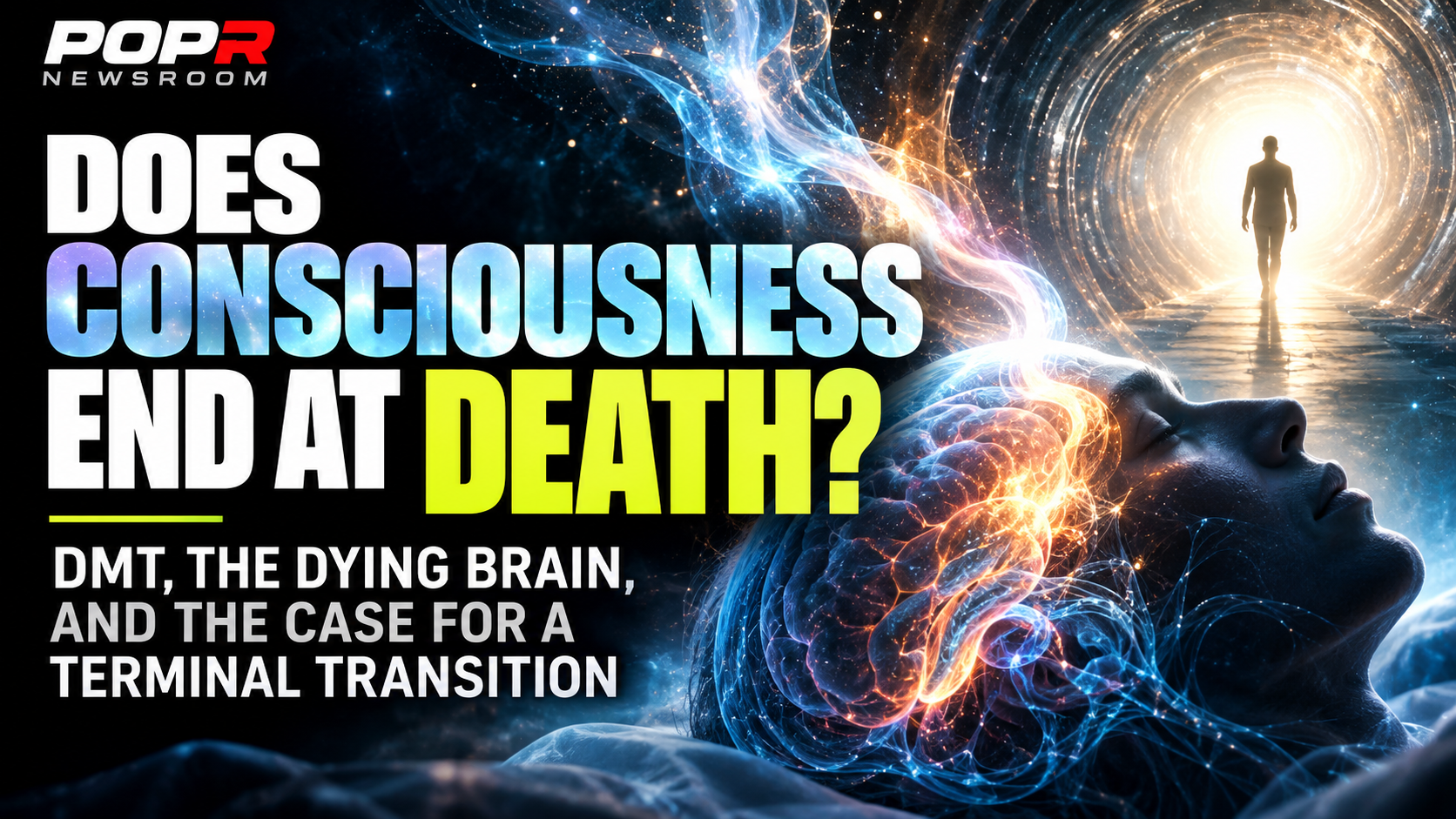
I am asking whether the processes surrounding death could help prepare a person for continuity beyond the body. I believe that possibility deserves investigation. My first phase brings together brain activity, DMT findings, pineal questions, reports from people revived after cardiac arrest and ideas about mind. It opens research paths, but it does not yet determine the answer.
I am not a scientist or physician. I am an enthusiast and independent investigator, and this work comes from curiosity and hope. I want to understand whether the biology of dying includes processes that could help prepare the self for continuity beyond the body. My first phase is a beginning and an invitation for others to help shape what comes next.
What is the proposal I am putting forward?
I call this developing framework the Buchanan Terminal Transition Hypothesis. At its center is a possibility: as the brain shuts down, changes in chemistry, signaling and experience might prepare or carry part of a person’s identity or spirit toward continuity beyond the body. My first phase brings that possibility into focus as a research question and an invitation to explore.
When I use “transport,” I am reaching for a way to describe a possible transition in consciousness or identity. I want to explore whether the mind, the pineal gland and biochemical processes that resemble higher states of consciousness could be part of that path. These are questions for further research, and I welcome better methods and sharper language as the conversation grows.
I want the proposal examined through several related lines of inquiry. A chemical change, a person’s reported experience and a spiritual interpretation each bring a different perspective to the question. I can hold hope and scientific curiosity together while keeping those perspectives clear.
Why do reports from people revived after cardiac arrest matter?
I regard survivor accounts as evidence relevant to the possibility of continuity and as a reason to investigate how awareness, memory and brain activity relate. In AWARE II, a hospital study of 567 in hospital cardiac arrests, 53 patients survived and 28 completed interviews. Eleven reported memories or perceptions suggestive of consciousness. The study also reported EEG activity compatible with cognitive processing during CPR, when circulation was being supported.
These accounts and measurements give researchers concrete starting points for examining timing, brain activity, memory and experience together. During CPR, circulation was being supported, which makes careful timing especially useful for future studies. The study’s hidden visual target was not identified, and one participant identified an auditory stimulus. I want the full set of findings considered together as researchers build the next phase of the conversation.
A separate 2013 experiment reported a transient surge of organized high frequency activity and connectivity in rats after cardiac arrest. This animal study gives researchers another starting point for investigating how terminal brain dynamics unfold. I want future work to ask how these patterns relate to the experiences people describe.
What do the DMT findings add to this proposal?
The DMT research gives one chemical branch of my proposal a measurable starting point. A 2019 rat study reported increased sampled cortical DMT after experimental cardiac arrest. A 2026 rat study did not detect the proposed endogenous pool under different conditions. Because the studies were not an exact matched replication, direct comparison is a useful next step.
I see these findings as the beginning of a focused research question. Rat studies can help researchers refine methods, timing and detection, then consider what a human research program could responsibly examine. A matched comparison could clarify what changes, where it changes and when.
I have also encountered claims about a large DMT release in the stomach near death, but I have not identified the specific study in the research record for this first phase. I am keeping that as a lead to follow rather than treating it as a finding. Locating and evaluating the source could help clarify whether this belongs in the next round of research.
Why do I include the pineal gland in the question?
I include the pineal gland because I want researchers to ask whether it contributes to terminal chemistry or to states associated with changes in consciousness. My first phase gives me a reason to ask the question, and direct measurements could bring us closer to an answer. I am hopeful that this part of the proposal can be explored with clear, targeted research.
I want a biological investigation to consider the pineal gland alongside the rest of the brain, body chemistry and neural signaling. Researchers could examine whether a reproducible relationship appears, how it affects experience and how it fits alongside other systems. Each result would help make the next questions more precise.
Why do Mantak Chia and Caroline Leaf belong in this investigation?
Mantak Chia’s teaching about prolonged darkness interests me because it connects reported inner experience with an attributed sequence involving melatonin, pinoline, 5-MeO-DMT and DMT. I want this proposed connection taken seriously enough to investigate. The source record for my first phase does not include direct serial measurements in people, which gives researchers a clear question to explore next.
Dr. Caroline Leaf’s writing about mind, the nonconscious and quantum or spiritual interpretations gives me another perspective for shaping questions about consciousness. I want researchers to examine which parts can be described and measured, while allowing philosophical and spiritual interpretations to remain part of the wider conversation. A separate mind management pilot offers context for that discussion and can be considered according to the outcomes it measured.
These ideas do not need to share one mechanism to be part of a broader inquiry. Chia’s teaching, Leaf’s framework, reports from people revived after cardiac arrest and laboratory measurements each offer a different way into the question. I want them considered carefully because their connections may help identify questions that one discipline alone would overlook.
How could researchers investigate the biological mechanisms?
I would welcome independent laboratories comparing baseline and terminal conditions with sensitive assays, clear detection limits and contamination controls. Where ethically approved and clinically appropriate, researchers could align available chemical samples with EEG, ECG, oxygenation, circulation and medication records. No medical care should be delayed to collect data, and a blood result should be distinguished from a direct measurement of brain concentration.
For the chemical part of my proposal, I want researchers to look for a reproducible change in a relevant place and time window that could plausibly influence neural targets. If they find a change, they can investigate its source, its effect on the brain and any relationship to reported experience. If they do not, that result will help refine the chemical question while the broader question of continuity remains open.
Questions about personal continuity call for research designed specifically for them. One possible approach would use preregistered concealed targets, precise timing, blinded assessment, controls against information leakage and independent replication. The aim would be to let the evidence develop carefully and give researchers more insight into a question that matters to many people.
What do I mean when I say continuity remains open?
I am hopeful about the possibility of continuity after death. My first phase does not include every account, tradition, discipline or proposed mechanism. It is a beginning, and I want people to bring more experience, expertise and thoughtful questions into the conversation. I see the open work as an invitation to learn, not a conclusion about what happens when we die.
This report is an invitation to research and discussion, not a recommendation to use DMT or ayahuasca, attend a darkness retreat or change medical care.
About this report
I originated this proposal and wrote the report as a first exploratory synthesis. The source record for this phase is partial, and I welcome researchers and other readers who can help check, challenge and expand it. I hope this opening work leads to more insight into a question I believe is worth asking.